
Pressure relief systems: rupture disc, safety valve or both
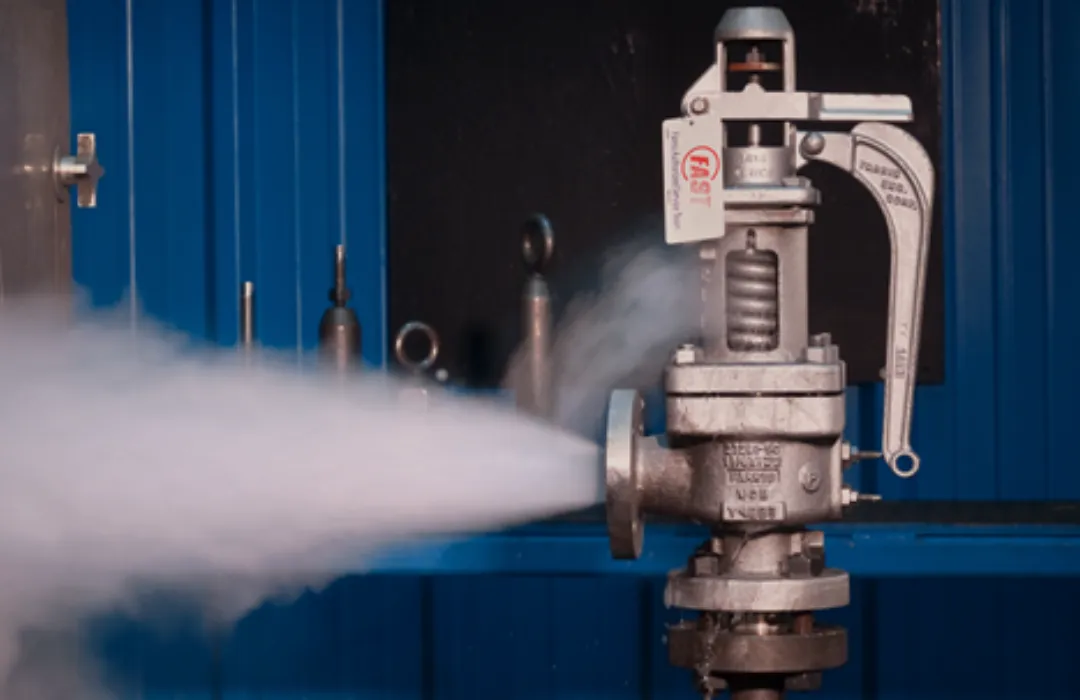
Every vessel or line that can exceed its design pressure needs a pressure relief device. The two main options are the rupture disc and the safety valve (PSV). Each has clear advantages, and in many cases the best solution is to combine them. P&V Control Devices supplies both through the brands it represents.
Rupture disc
It is a metallic or composite membrane calibrated to open at a specific pressure. It has no moving parts, does not leak and opens fully in milliseconds, making it ideal for rapid pressurization, corrosive, viscous or toxic media, and services where no emissions are tolerated. Once it opens, it must be replaced. Types include reverse-acting discs, which allow operation close to the burst pressure, forward-acting, composite and sanitary discs.
Safety valve
It opens when the set pressure is reached and recloses when the pressure drops, so the process can keep running. It is the natural choice when overpressure events are frequent or when losing the entire contents of the equipment is not acceptable. Its limitations: it can leak near the set point, its internals are damaged by corrosive or polymerizing media, and it requires periodic maintenance. Low-pressure storage tanks use pressure/vacuum relief valves.
Combined disc and valve
Installing a rupture disc upstream of the valve isolates its internals from the process: it protects the valve from corrosion, eliminates leakage during normal operation and allows a valve made of standard materials to be used. ASME Section VIII recognizes this combination; the space between the two must be fitted with a burst indicator or alarm to detect disc opening or leakage.
How to choose
- Operating pressure and temperature relative to the burst or set pressure.
- Process medium: corrosive, toxic, sanitary, solids-laden or polymerizing.
- Type of service: static, pulsating or cyclic, and whether vacuum is present.
- Consequence of opening: whether the process can be shut down or must keep running.
With this data we can help you select the device and its holder. See also our article on pressure relief in chemical and petrochemical plants or request a quote.