
Description
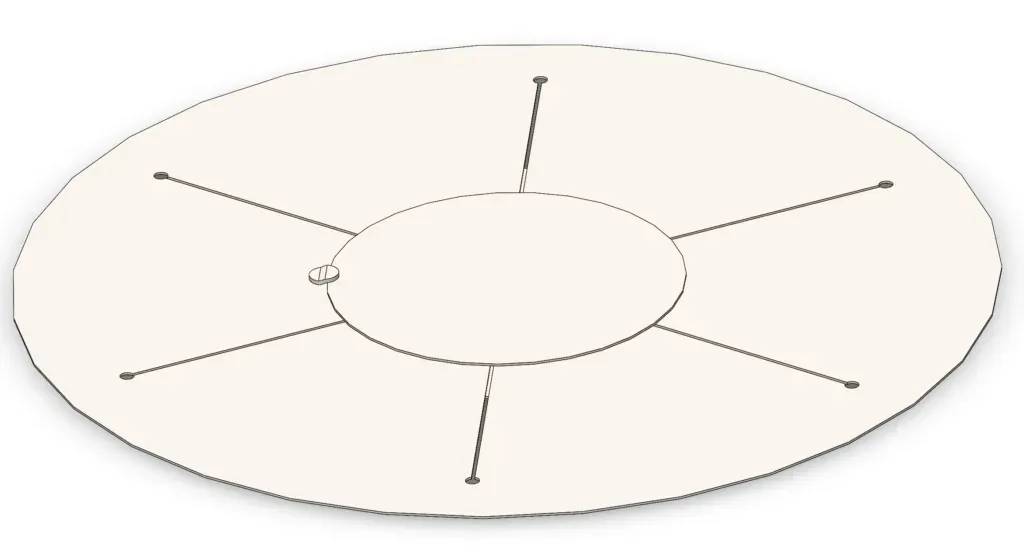
A slotted metal component installed upstream of a rupture disc assembly to protect the disc from extreme temperatures.
When process temperatures rise to levels that the rupture disc or its lining material cannot withstand, you need a CDC heat shield. This shield works as a barrier, reducing the rupture disc's exposure to high temperatures. It limits the continuous flow of high-temperature gases or vapors, allowing the piping between the shield and the rupture disc to function as a heat sink.
When process temperatures rise to levels that the rupture disc or its lining material cannot withstand, you need a CDC heat shield.
The shield works as a barrier, reducing your rupture disc's exposure to high temperatures. It restricts the continuous flow of high-temperature gases or vapors, allowing the piping between the shield and the rupture disc to act as a heat sink.
The CDC heat shield is a flat metal component for direct installation between bolted pipe flanges, upstream of the rupture disc. It is slotted to allow pressure transmission to the rupture disc and to provide a full opening when the disc bursts.
An evaluation is required to determine the spool assembly length needed to achieve an adequate heat sink. There is no single rule applicable to all possible applications. The temperature drop is best determined by considering the following design parameters:
Maximum rated temperature of the rupture disc
The maximum expected temperature to which the exterior of the assembly will be exposed (note that the rupture disc and the spool assembly cannot be insulated)
Connection of other external cooling devices
Process medium
Total surface area of the spool assembly and the rupture disc
Heat transfer to the rupture disc by radiation, conduction, and convection
Note that the heat shield cannot be placed directly below the holder inlet when used with reverse-buckling rupture discs.
Nominal Size Range: 1″ – 36″ (25mm – 900mm)
Burst Pressure Range: N/A
Recommended Operating Ratio: N/A
Service: Gas
Compatible with BDI Alarm System?: No
ASME Code Stamp Available?: No